Why are vaccinations important?
While vaccination jabs might not be the most fun for your baby, they are vital in keeping them fit and healthy. Your baby will require their first vaccination at the age of eight weeks to shield them - and other children they come into contact with - against the spread of diseases.
Immunisation schedule
Vaccinations protect your baby against diseases like measles, rubella, tetanus and meningitis. Your baby needs their first injections at eight weeks, through to their mid-teens.
Vaccinations Schedule:
8-week vaccinations:
6-in-1 vaccine – 1st dose
MenB vaccine – 1st dose
Rotavirus vaccine – 1st dose
12-week vaccinations:
6-in-1 vaccine – 2nd dose
MenB vaccine – 2nd dose
Rotavirus vaccine – 2nd dose
16-week vaccinations:
Pneumococcal vaccine – 1st dose
6-in-1 vaccine – 3rd dose
1-year vaccinations (Children born BEFORE 1st July 2024):
Pneumococcal – 2nd dose
MMRV – 1st dose
MenB – 3rd dose
Hib/MenC
1-year vaccinations (Children born ON or AFTER 1st July 2024):
Pneumococcal – 2nd dose
MMRV – 1st dose
MenB – 3rd dose
18-month vaccinations (NO appointments for children born BEFORE 1st July 2024. See below for children born ON or AFTER 1st July 2024):
6-in-1 vaccine – 4th dose
MMRV vaccine – 2nd dose
2 to 15-year vaccinations:
Annual flu vaccination
3 years and 4 months vaccinations (Children born BEFORE 1st July 2024):
4-in-1 (pre-school booster) – 1st dose
MMR vaccine – 2nd dose
3 years and 4 months vaccinations (Children born ON or AFTER 1st July 2024):
4-in-1 (pre-school booster) – 1st dose
12 – 13 years vaccinations:
HPV vaccination
14 years vaccinations:
3-in-1 (teenage booster)
MenACWY (against meningitis, sepsis & septicaemia
What to expect at your child's immunisation appointment
Your nurse or doctor will first ask for the ‘red book’ – your child’s health record. Once you and your little one are comfortable, the vaccine will be administered usually by injection. Your baby or child may cry for a little while after a vaccination, but they should feel better after a cuddle.
Vaccine side effects
There are a few side effects your little one might experience after having their vaccination – whether that’s from an 8- or 12-week baby immunisation, or their one-year injections. While this can seem a little daunting as a parent, most vaccine side effects are mild and don’t last long.
Common vaccine side effects:*
Sore and red area where the needle goes in for 2 to 3 days.
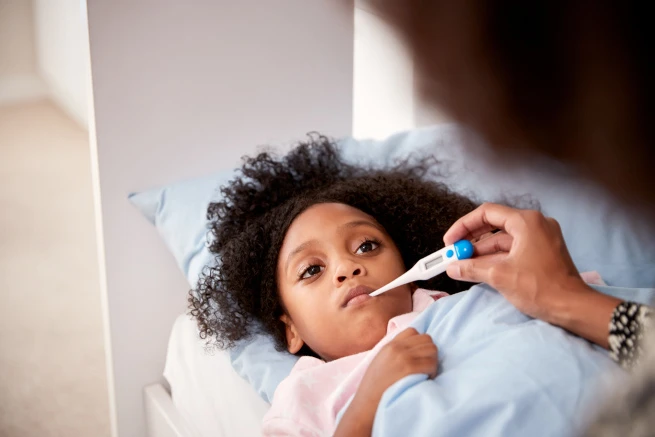
Children feeling a bit unwell or developing a high temperature - a high temperature of 38°C or more
Crying and upset straight after the injection.
diarrhoea and/or vomiting - more common with Men B vaccine
*This list of side-effects is not exhaustive; for more information on vaccines and side effects, visit:
How to treat vaccination side effects
It’s normal for babies and young children to be upset for a little while after an immunisation by injection. Cuddles and comfort also go a long way after immunisations, but should your youngster develop a post-immunisation fever, you can try the following:
Give them plenty of fluids
Keep them cool – make sure they are not wearing too many layers
Give them liquid paracetamol or ibuprofen to help bring the fever down. If your child is getting their Men B vaccination, you can try giving paracetamol soon after vaccination before developing a fever (see below) – this will reduce the risk of your child having a post-immunisation fever.
Post-immunisation fever is perfectly normal, and it’s a comfort to know that this side effect is considered mild and doesn’t last a long time – usually between one and two days. If it sticks around for longer, then contact the nurse or GP where you had your vaccines. Again, if there’s anything that you feel is not normal after the vaccinations, contact the place where you had them.
Post-immunisation fever and Meningitis B vaccine
Post-immunisation fever is fairly common when the Meningitis B vaccine is given with other routine vaccinations at two and four months. It is recommended that you give your baby liquid paracetamol to reduce the risk of fever after the vaccination.
When to see a doctor
Your child’s post-immunisation fever and any redness or soreness where they’ve had the injection should clear up within a couple of days.
If you’re concerned your child is feeling out of sorts and their symptoms are not getting better, then call your GP or 111.
How to treat vaccination side effects
Give them plenty of fluids
Keep them cool – make sure they are not wearing too many layers
Give them liquid paracetamol or ibuprofen to help bring the fever down. If your child is getting their Men B vaccination, you can try giving paracetamol soon after vaccination before developing a fever – this will reduce the risk of your child having a post-immunisation fever.
References
Routine childhood immunisations from 1 July 2025 (babies born from 1 July 2024). UK Health Security Agency. https://assets.publishing.service.gov.uk/media/68386e3c210698b3364e8685/UKHSA_13284_ Routine_Childhood_imms_schedule_from_1July2025__born_from_1July24_.pdf (accessed August 2025)
NHS vaccinations and when to have them. NHS. https://www.nhs.uk/vaccinations/nhs-vaccinationsand-when-to-have-them/ (accessed August 2025). For more information on possible side effects please visit: https://www.nhs.uk/vaccinations/